A Fascination with Doom
How our Modern Doomscrolling Epidemic continues the tradition of Medieval Apocalyptic Texts
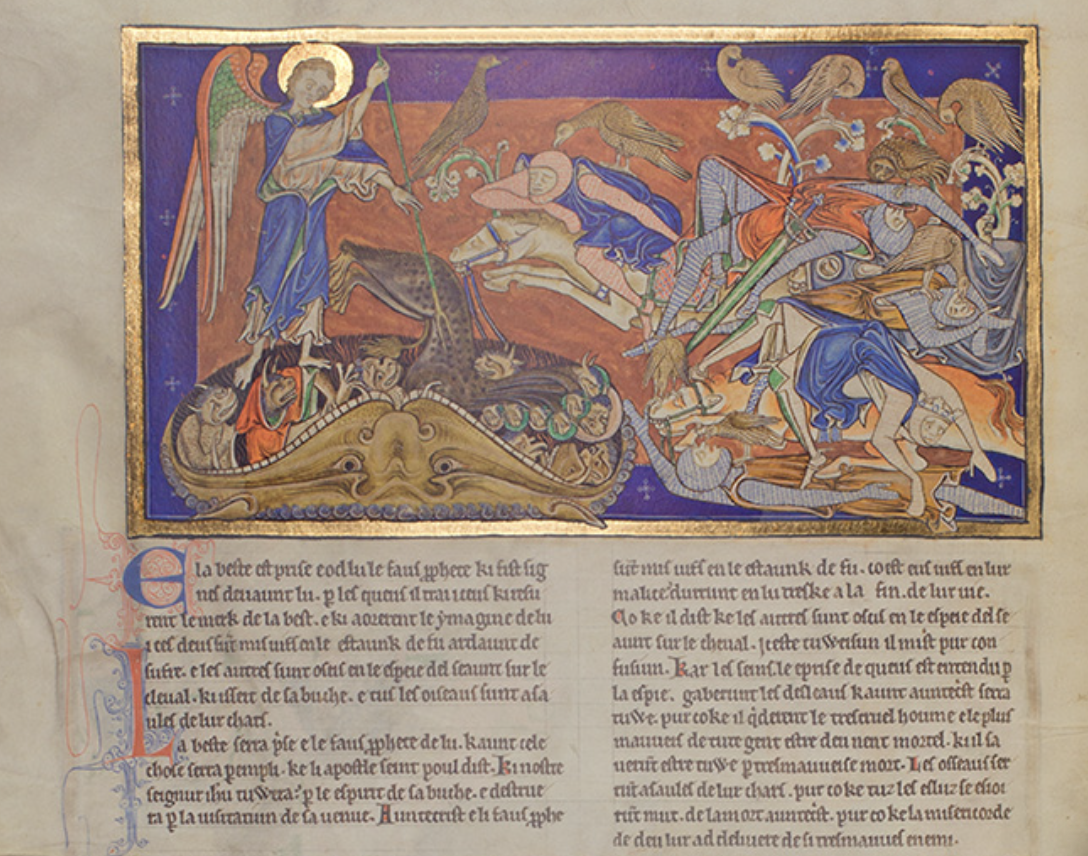
Trinity Apocalypse, Northern France or England — 1242–1260
Hello everyone, and welcome to the maiden voyage of the Modern Old English newsletter! I hope everyone is enjoying the luscious beginnings of summer. This week, in conducting some preliminary research for another project, I encountered several examples of Medieval apocalyptic manuscripts that fascinated me, as a genre that I had not spent much time working with in the past. After going down quite an extensive rabbit hole (which I encourage everyone to do, if only for the fabulously ludicrous illustrations of this genre of manuscripts, which I found consistently bold and deeply entertaining), I found some of the patterns and ideas I had noticed sticking with me, as I read the news and had unrelated conversations with family and friends. It might be a bit of a darker beginning to this series of writings, but I also found this topic so interesting, and I was hoping others might have some ideas or perspectives to share!
I hope you enjoy, and I would love to hear what you think in the comments!
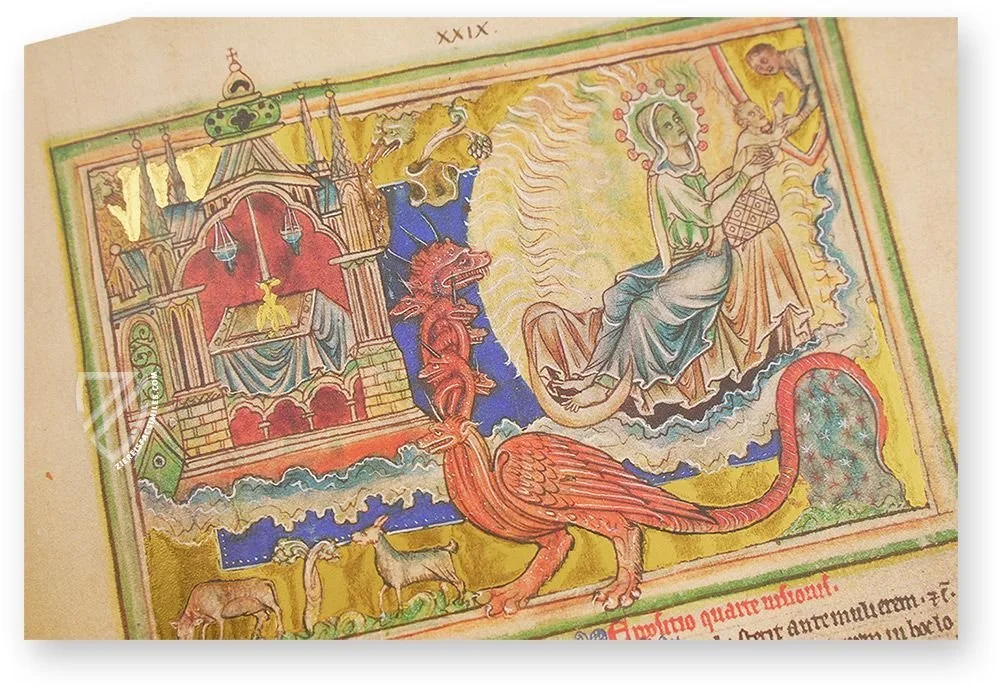
Trinity Apocalypse, Northern France or England — 1242–1260
First, what is Medieval apocalyptic writing? The genre can be traced back to very early roots in fourth century Babylonia and Persia, but is strongly associated with the Judeo-Christian tradition, often experiencing resurgences in popularity during times of acute upheaval or strife. Given this pattern, the fact that this was a prominent theme throughout the Middle Ages, then, a period marked by religious oppression, plague, and other intermittent catastrophe, should not be surprising.
The apocalyptic classification is expansive, spanning centuries as well as cultures and continents, but most apocalyptic literature is defined by a few shared traits. It typically features a prophetic dream or vision that reveals the impending end of the world, followed a divine judgement and resolution. In fact, the word “apocalypse” originates from a Greek word meaning "revelation", highlighting the genre’s aim of unveiling future catastrophic or significant events.
This vision is often accompanied by a divine messenger, who serves to interpret and explain the complexities of the prophecy. The prophetic images themselves often contain strange and frightening supernatural events and a liberal use of political and religious symbolism. Another consistency, especially in later examples of the style, is a defeatist and pessimistic view of the present. Apocalyptic authors often take a despairing view of the present, while offering the post-apocalyptic new world as a hopeful realm that lacks the suffering and corruption of their current circumstances. These texts often convey dual messages of hope and of warning: there is salvation to come, and there is also impending catastrophe for those who are undeserving of a holy deliverance.
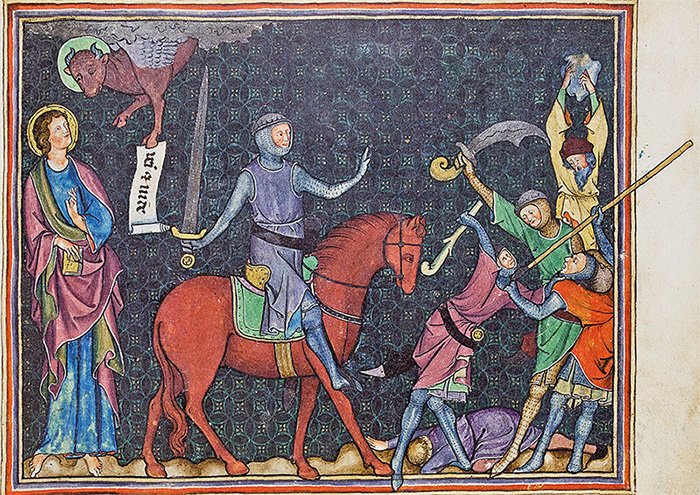
Val-Dieu Apocalypse, Normandy (France) — Ca. 1320–1330
One prolific example of the apocalyptic genre is the Book of Daniel, which includes detailed descriptions of visions foretelling portentous future events. In one, four beasts rise up from the sea, each representing different contemporary imperial forces. The last of these, a ten-horned monster understood to symbolize the Seleucid Empire, a major Hellenistic force that was founded in 312 BCE following the death of Alexander the Great, is described as “terrifying, and dreadful, and exceedingly strong”. It tramples and ultimately devours the earth, growing an additional horn which gains sentience and blasphemes God. Scholars have interpreted the strange detail of the horn to represent Antiochus Epiphanes, a king known for outlawing and persecuting Judaism. Later, the beast is judged in heavenly court, and is stripped of its power over the world. The vision ends with the “son of man”, accompanied by “clouds of heaven”, arriving to reestablish God’s kingdoms on Earth.
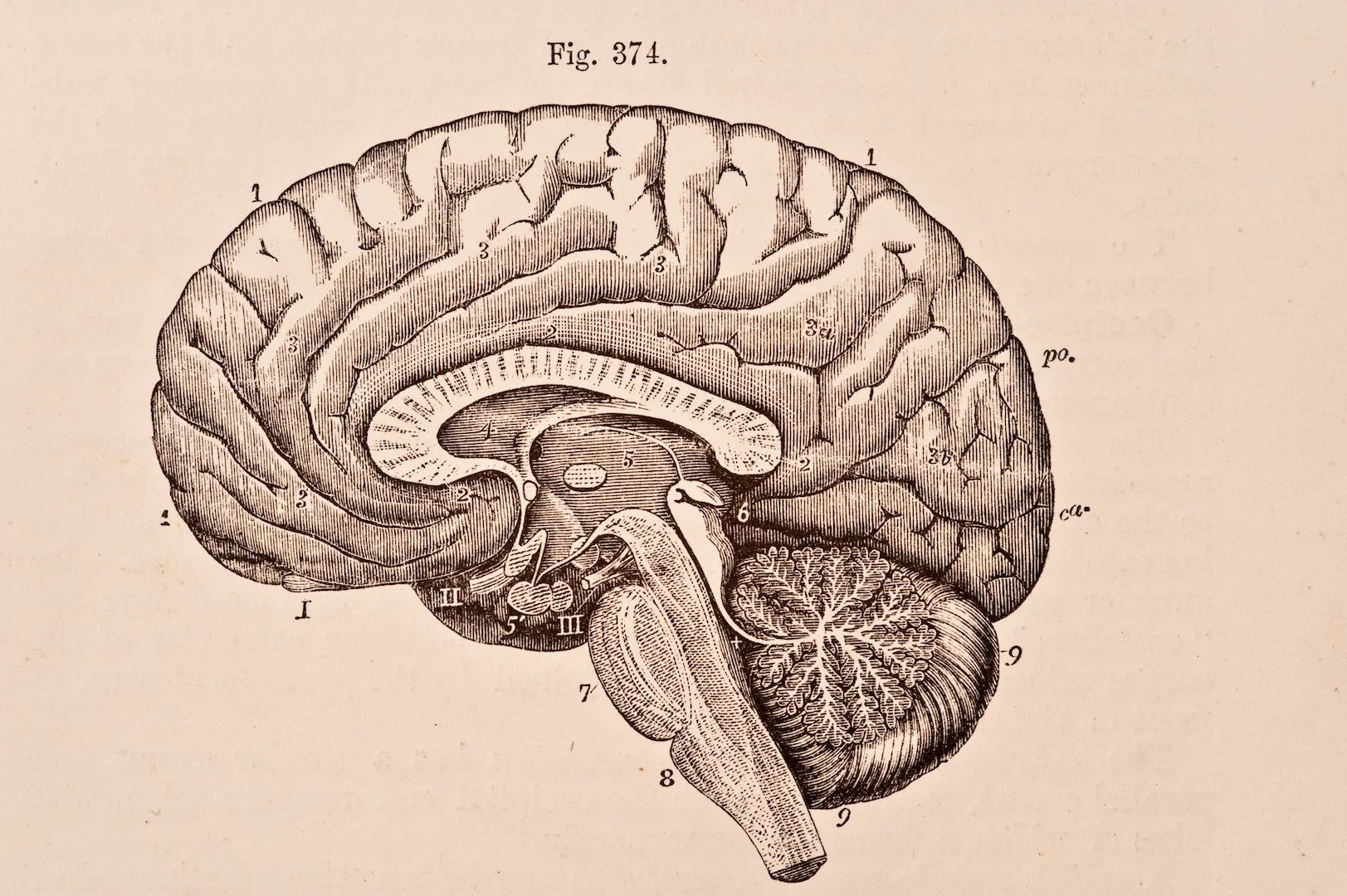
A medical illustration of the human brain from 'Quain's Elements of Anatomy, Eighth Edition, Vol.II' depicts the right half of the brain, 1876.
The phenomenon of doomscrolling, on the other hand, first rose to prominence in public attention during the COVID-19 pandemic – making the Oxford English Dictionary’s words of the year list in 2020 – but the pattern has far from subsided in the intervening years. Doomscrolling is the impulsive behavior of scrolling through an endless stream of bad news or disheartening and negative content. The behavior is rooted in the region of the brain known as the limbic system, which promotes the well-documented fight or flight response to perceived danger. This neural wiring makes us vigilant and responsive, constantly scanning for threats. The more we scroll and find violent, angering, or otherwise upsetting content, the more we feel that we need to, ostensibly to protect ourselves. This can extend to a range of “bad news”; it can include polarizing political perspectives that trigger anger and outrage, or preventable tragedies that increase our feeling of hopelessness with the state of the world. It can even apply to seemingly positive content: an image of a close friend, say, enjoying a sunny beach vacation with a gaggle of smiling companions can increase feelings of isolation. Often, doomscrolling begins as an attempt by the brain to soothe feelings of danger: we feel unsafe or confused, and so we try to make sense of what’s going on in the world around us by rapidly consuming information. But this can become a cycle, where the action becomes a trigger to further anxiety and negativity.
In the years between the coining of the phrase and the present, doomscrolling and its associated psychology has produced notable ripple effects. For people caught up in the isolation and despair caused by the impulse to constantly consume content highlighting problems in society, communities have formed, connected by a shared sense of outrage. And often, these groups look towards a few prominent leaders who seem to offer, at last, the simple explanations that the frantically consuming brain was seeking all along.
The pattern of emergence of certain unnerving, extremist online communities shares many similarities to the instinct found in Medieval apocalyptic writings, to reject the present and to seek a deus ex machina. These movements are usually defined and represented by a figurehead of sorts, an individual whose convictions pioneer the ideology, presenting a notably unambiguous perspective on the plight of modern society and often offering up an unequivocal scapegoat. The Book of Daniel and countless other historical apocalyptic texts display a parallel arc of reasoning: the world is hopelessly flawed, there is a terrible force (sin, usually, represented by a physical terror) that is to blame for the unjust fate of the good. Similar to the magnetic pull of internet cult personalities, they present a path forwards, in which justice is looming, if you can hold tight to the truth. The basic structure of both patterns is similar in the way that it caters to our physiological desires: reject the shape of the society of the present, place blame neatly, and offer a vision of a world mended and reimagined in the ideal vision of the consumer.
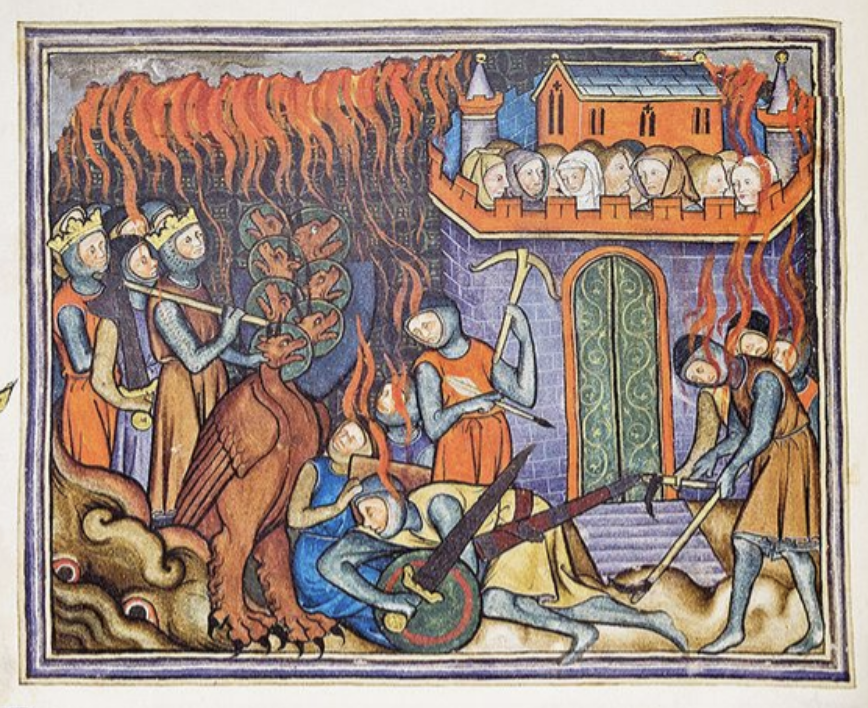
Val-Dieu Apocalypse, Normandy (France) — Ca. 1320–1330
In an American landscape where the decrease in religion’s impact on daily life ranks among the largest recorded in any country, this unusual comparison poses the question of whether the fatalistic human impulses satisfied for millennium by faith in the supernatural has merely shifted onto new, more overtly political idols. The enduring appeal of apocalyptic narratives over time suggests that they satisfy a deeply human need beyond religious faith alone: for reassurance amid times of turbulence, be it religious persecution, plague, or a polarising presidential election. This continuity also highlights an instinct in our psychology as a species to fatalistically reject a world that seems hopelessly fractured and dark, to find one source of blame for the myriad of distressing afflictions of society, and to look towards an imminent sea-change that will erase all injustice, inevitably replacing it with an elysium for those who believed, in anything from a higher power to the truth of online rhetoric.
It’s unsettling to think that we’re wired to avoid making incremental change to a reality that we find upsetting, that most of us would prefer to engage in cathartic indignation and fantasies of miraculous transformation rather than realizing our power to impact, even in a minute way, the course of the world around us. Is this the best way to handle times of widespread crisis, or does this approach cause all hope of better to wither away as we collectively dream of wholesale transfiguration of reality? Regardless, given the sustained inclination towards apocalyptic frameworks and solutions, it’s one that has stuck.
Bibliography:
“The Book of Daniel.” Jewish Virtual Library, https://jewishvirtuallibrary.org/daniel-full-text.
Salamon, Maureen, and Toni Golen. “Doomscrolling dangers.” Harvard Health, 1 September 2024, https://www.health.harvard.edu/mind-and-mood/doomscrolling-dangers. Accessed 22 June 2026.
“The Seleucid Empire (323–64 B.C.).” The Metropolitan Museum of Art, 1 October 2004, https://www.metmuseum.org/essays/the-seleucid-empire-323-64-b-c. Accessed 22 June 2026.
Sheposh, Richard. “Apocalyptic literature | Literature and Writing | Research Starters.” EBSCO, https://www.ebsco.com/research-starters/literature-and-writing/apocalyptic-literature. Accessed 22 June 2026.
Sterling, Bruce. “Apocalyptic literature | Description, End Times, Eschatology, Prophecy, & Examples.” Britannica, 21 May 2026, https://www.britannica.com/art/apocalyptic-literature. Accessed 22 June 2026.
Vigers, Benedict, and Julie Ray. “Drop in U.S. Religiosity Among Largest in World.” Gallup News, 13 November 2025, https://news.gallup.com/poll/697676/drop-religiosity-among-largest-world.aspx. Accessed 22 June 2026.
Ziereis, Christian. “Apocalypses.” Ziereis Facsimiles, 3 May 2023, https://www.facsimiles.com/worlds-of-wisdom/genres/apocalypses. Accessed 22 June 2026.